Start with the evidence, not the spreadsheet
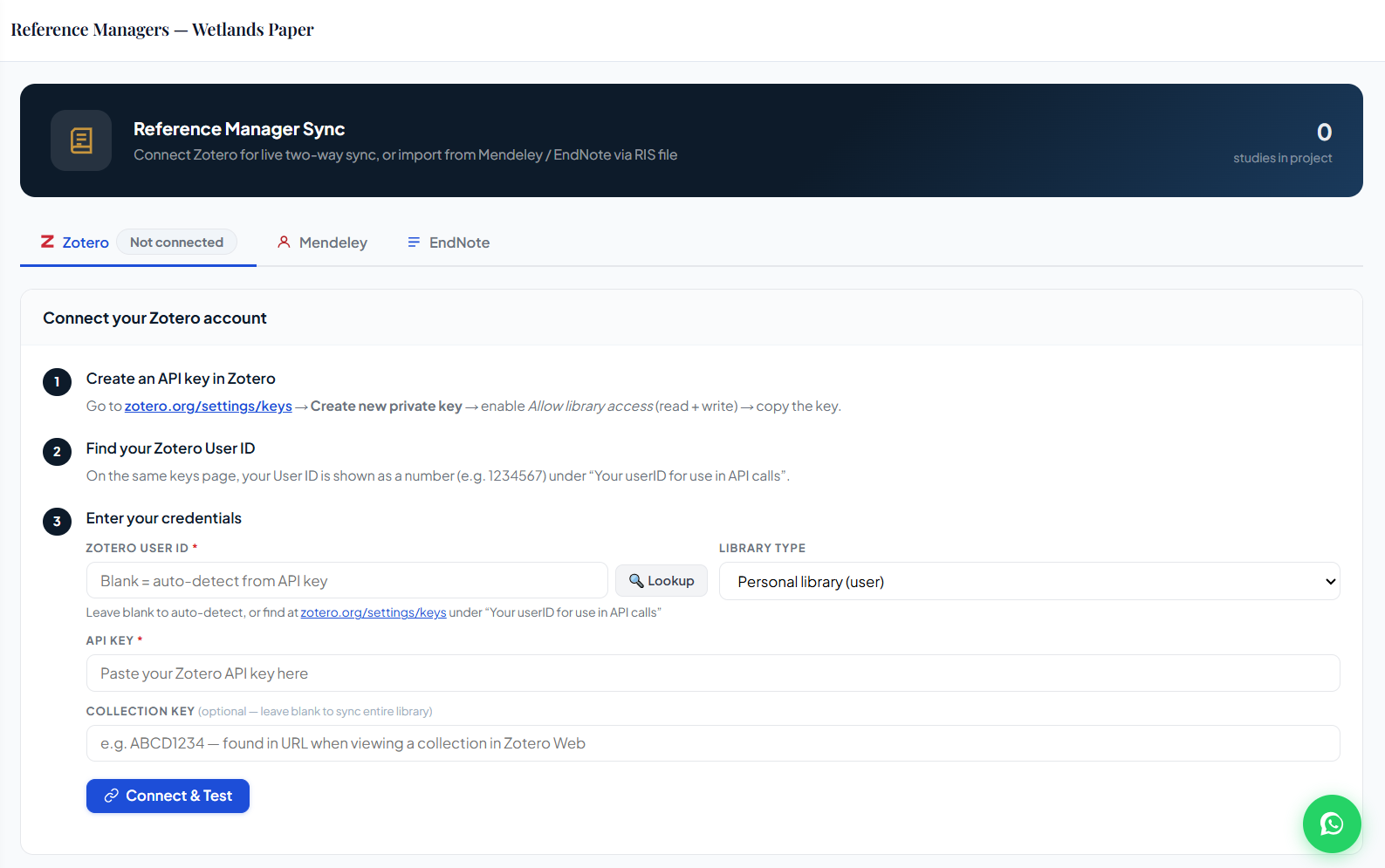
Search nine databases from one workspace, then sync Zotero or import RIS from Mendeley and EndNote. Cross-source duplicate matching keeps the library clean before screening begins.
Search nine databases, screen with blinded co-reviewers, extract structured data, assess risk of bias and GRADE certainty, run meta-analysis, and export publication-ready figures. No R, Python, or desktop install.
Each stage carries context forward. Screening decisions inform counts, extracted arms feed analyses, and appraisal stays attached to the evidence, which cuts manual handoffs and keeps the review easier to audit.
Search nine databases from one workspace, then sync Zotero or import RIS from Mendeley and EndNote. Cross-source duplicate matching keeps the library clean before screening begins.
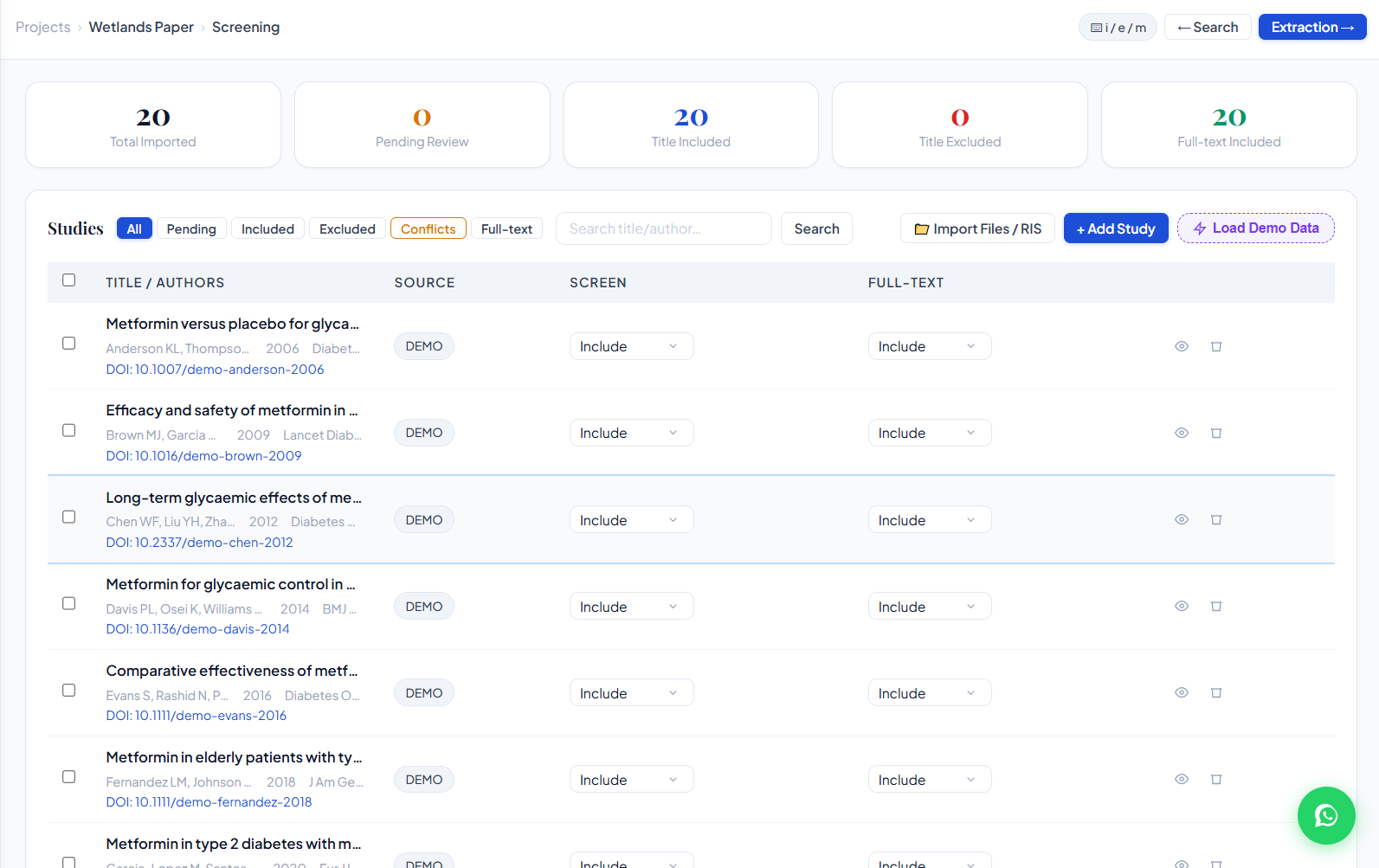
Bulk include, exclude, or maybe. Blinded dual-reviewer mode holds each vote back until both are in, then routes disagreements to a conflict queue with Cohen's κ.
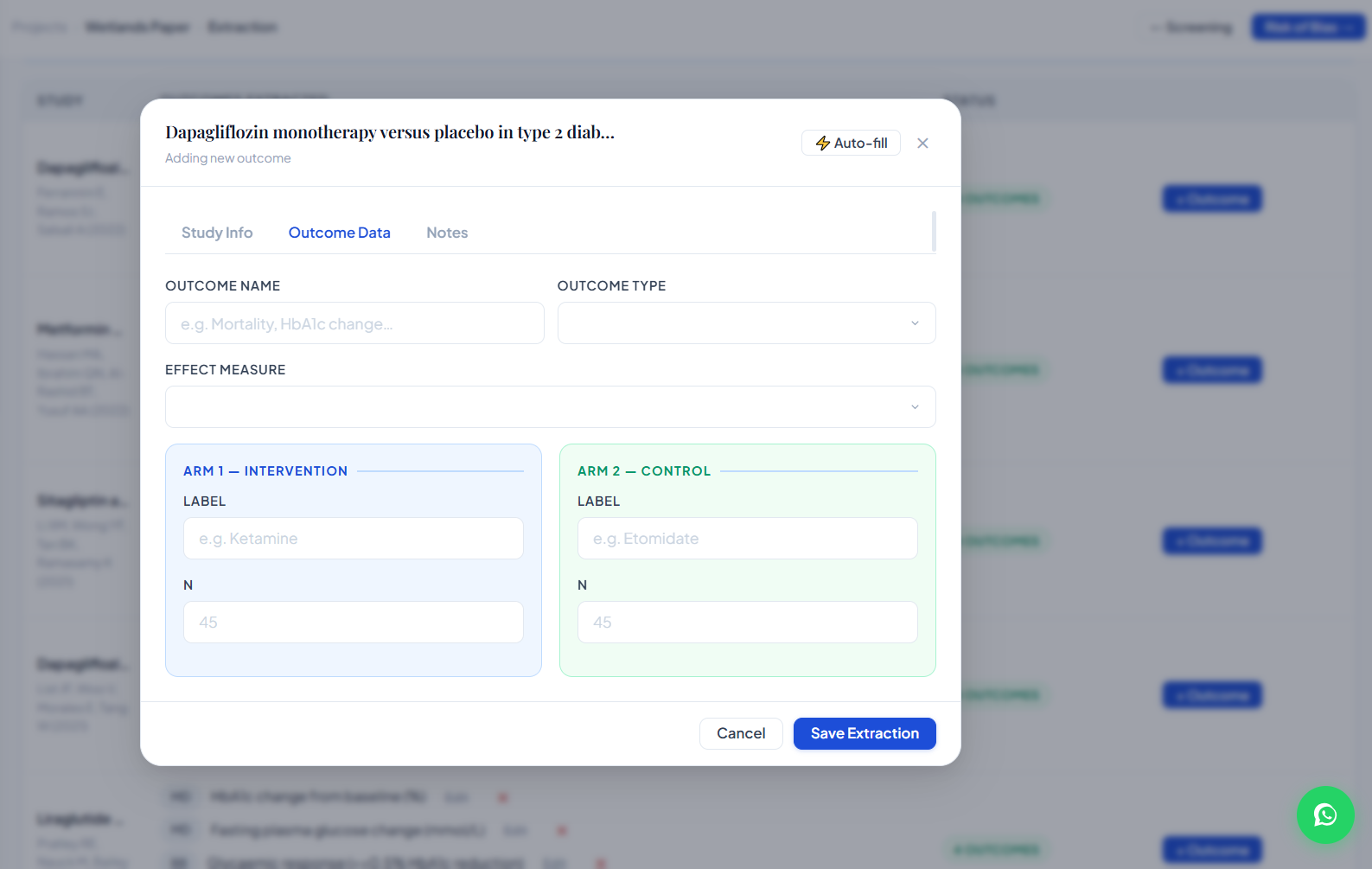
Intervention and control captured separately for continuous and dichotomous outcomes. Auto-fill pulls study metadata from a DOI or PMID. Unlimited outcomes per study.
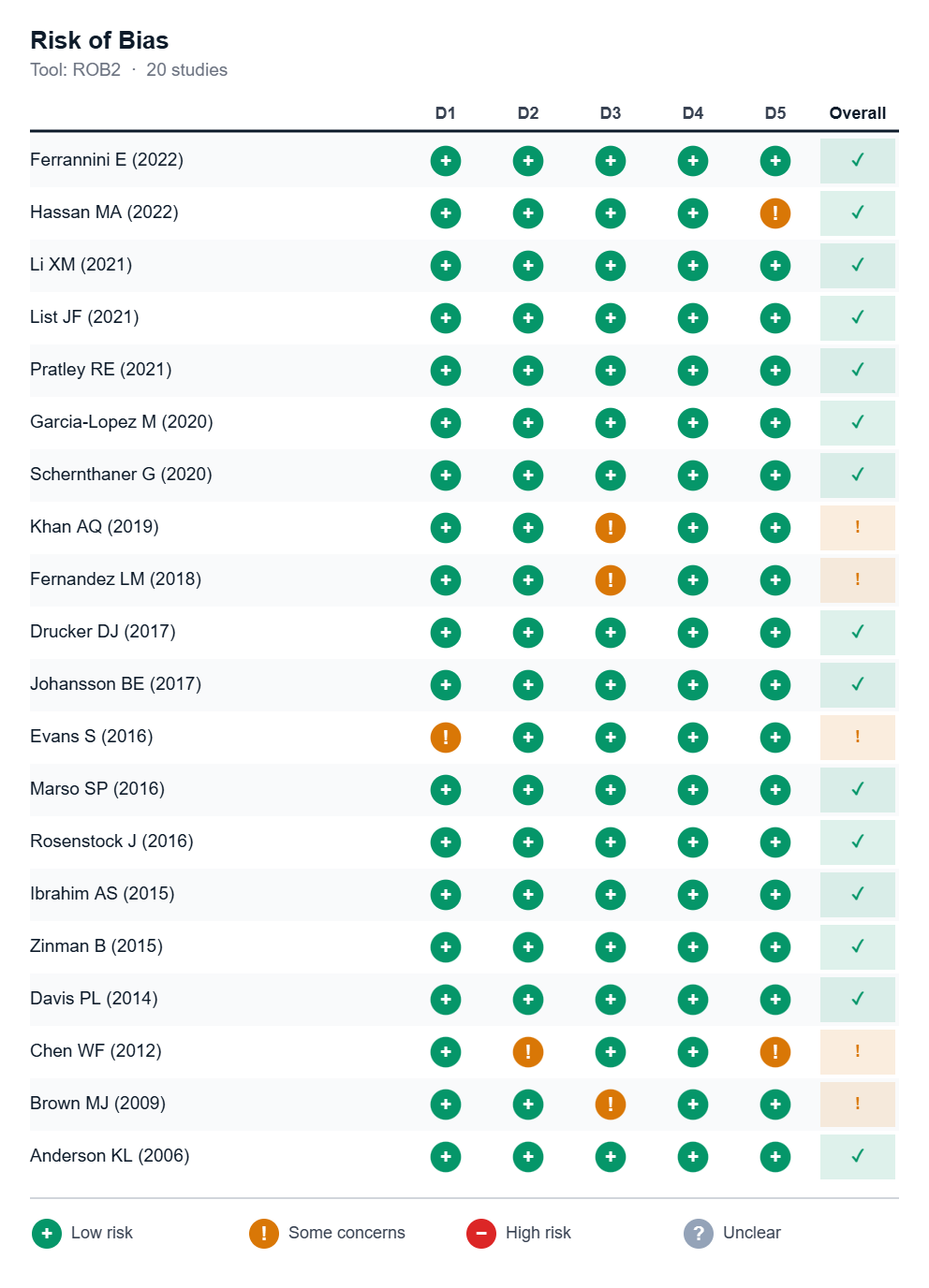
RoB 2, ROBINS-I, Newcastle-Ottawa, QUADAS-2, and AXIS. Domain judgements roll up into the traffic-light table journals ask for, with an overall column.
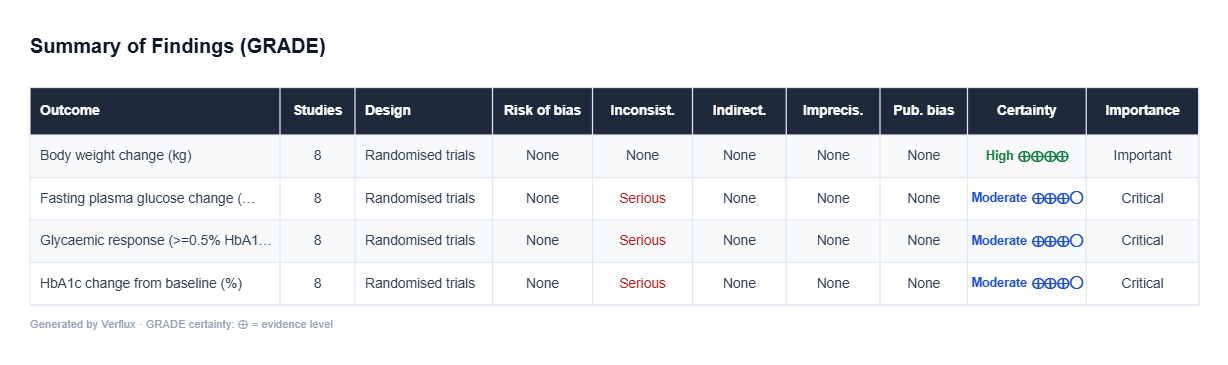
Five downgrade and three upgrade domains, rated outcome by outcome. The summary-of-findings table builds itself from the ratings.
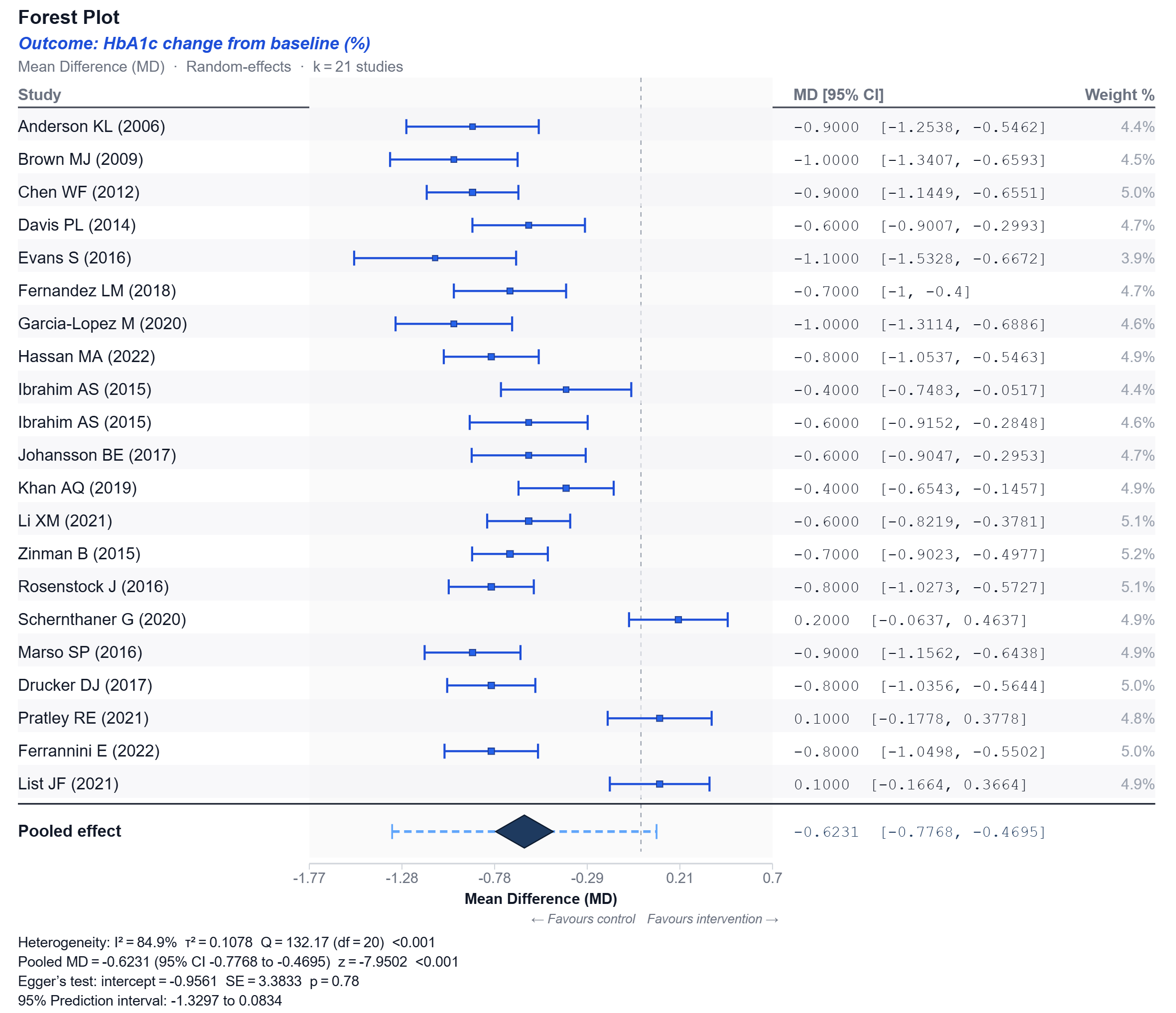
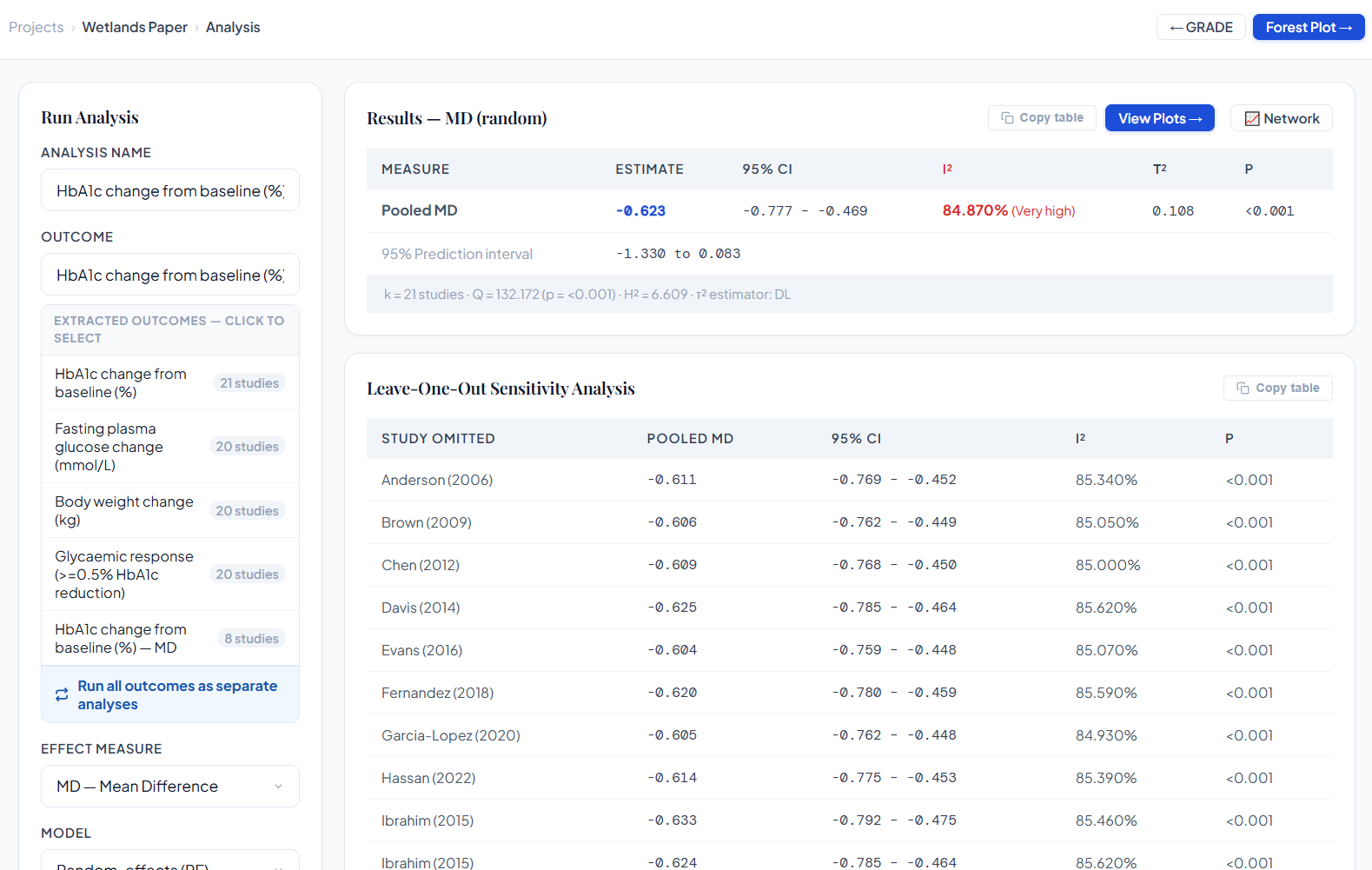
Random-effects and fixed-effect models with subgroup analysis, leave-one-out sensitivity, meta-regression, and Egger's test. Heterogeneity reported as I², τ², Q, and H².
Forest plot with weight-proportional markers and a prediction interval, funnel plot with pseudo-confidence region, and a network diagram for direct comparisons.
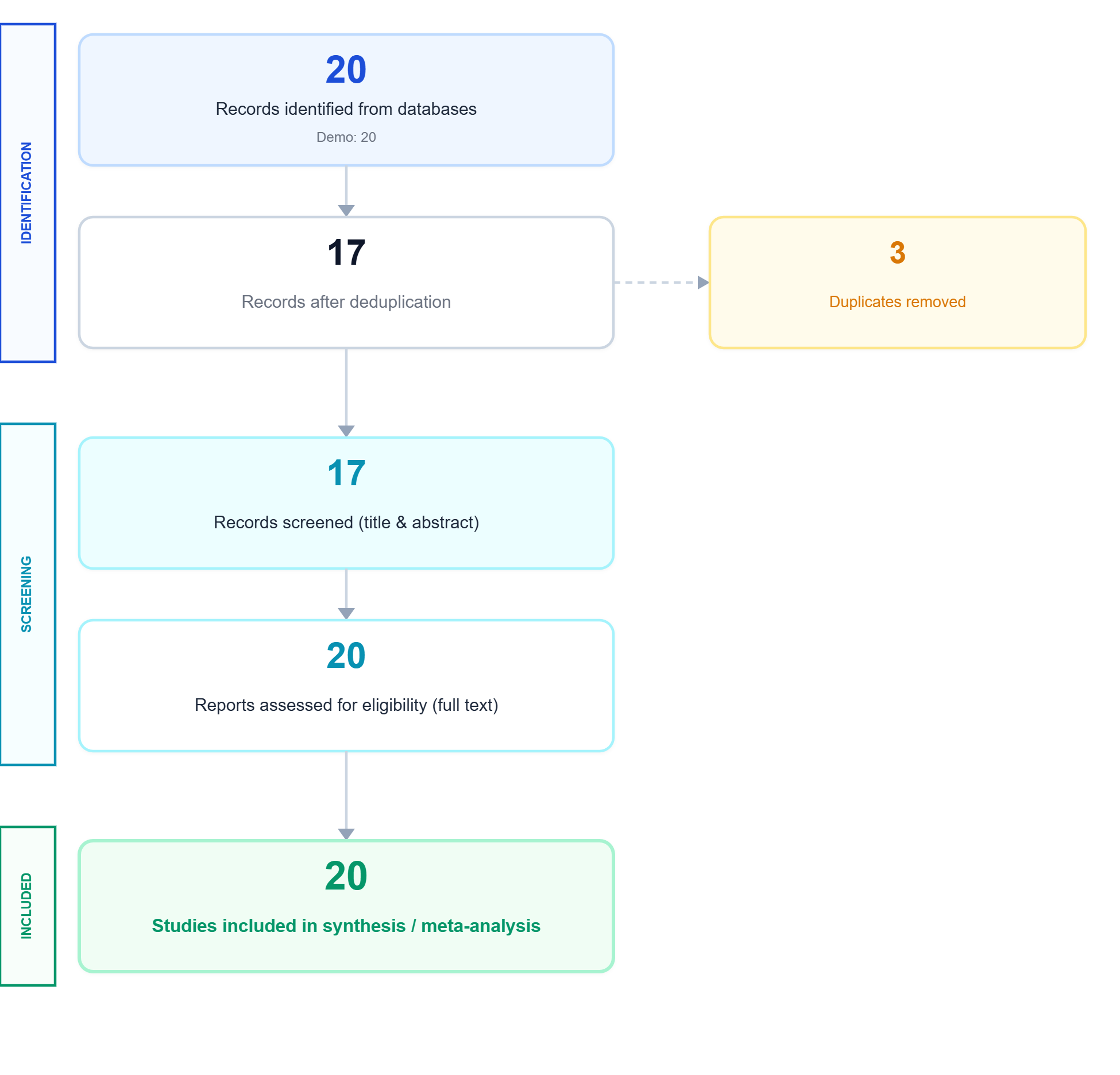
The flow diagram is built from your own screening counts and stays editable. Methods wording and exports in CSV, JSON, RIS, DOCX, and HTML.
Reference manager sync01 / 08
Verflux reads the full text attached to each record and drafts every field with the sentence it was taken from. You accept, edit or reject. Nothing reaches your analysis unapproved, and anything the model cannot find in the paper is flagged instead of filled in.
Attach the PDF to the record it belongs to. Verflux looks for an open-access copy by DOI through Unpaywall, and you upload whatever it cannot find. One copy is stored per unique file however many records point at it, so a paper reused across projects is stored once.
One click drafts the whole extraction: design, setting, sample, arms, outcomes. Each value arrives with the quote it was read from, and a paper reporting several outcomes produces one set of arm data per outcome instead of forcing you to pick one.
Every draft value is checked against the source text first. Anything that cannot be found there is marked for you rather than quietly entered. You accept, edit or reject each field with the supporting quote in front of you.
Nothing reaches your extraction table, your forest plot or your export until you accept it.
“Mean change in HbA1c from baseline was -1.24 percentage points in the intervention arm”
This number is not in the source text. Check it against the PDF before accepting.
An illustration of the review screen. The second card shows what happens when a proposed number cannot be found in the paper.
A systematic review is a sequence, not a feature list. These are grouped by the stage they belong to, so you can see where each one fits in the work you are already doing.
Verflux names the methods behind the result and keeps core estimator references close to the output. The goal is not a black box. It is a workflow that makes the statistical choices easier to verify, teach, and report.
Verflux keeps search, screening, extraction, appraisal, analysis, and reporting in the same project. That means fewer hand-offs, fewer spreadsheet copies, and one traceable path from retrieved records to the final figure.
Comparison reflects the public capabilities currently described by Verflux; third-party products and licensing can change over time.
Verflux supports careful evidence synthesis. It does not replace protocol design, critical appraisal, statistical judgement, or the researcher behind the work.
Output is publication-ready: 300 DPI figures, PRISMA 2020 flow diagrams, and methods text written for a manuscript.
Key estimators, assumptions, and source references are surfaced so the analysis is easier to inspect, explain, and defend.
Search, screening, extraction, bias assessment, GRADE, and analysis live in one project instead of being scattered across tabs and spreadsheets.
No-code workflows lower the technical barrier for students while preserving the structure serious review teams expect.
Researchers come to Verflux for speed, but the deeper value is continuity: fewer handoffs, fewer duplicate files, and a clearer path from screening decisions to the final analysis.
“I completed a 61-study meta-analysis in under a week. What used to take months of juggling PubMed, Excel, and R now happens in one browser tab. The forest plots are publication-ready.”
“The GRADE assessment and PRISMA 2020 flow diagram generation saved me enormous time. The statistical output matches R metafor, but I do not need to write a single line of code.”
“Finally a tool that handles dual-reviewer screening AND meta-analysis in one place. The conflict resolution queue is brilliant. Highly recommend for any research team.”
Start with the full analytical workflow free for 3 days. Choose monthly or annual billing when you are ready, and add AI-assisted extraction to any paid plan.
billed monthly · cancel anytime
Everything you need to publish
billed monthly · cancel anytime
Everything in Starter, with more room
billed monthly · cancel anytime
The full platform, without project limits
When Verflux supports your review, cite the software and describe the methods used. Clear reporting makes the analysis easier for readers, reviewers, and future researchers to understand.
Create a free account and work through the complete evidence-synthesis workflow before deciding whether Verflux belongs in your research process.